
Recessed Lighting Installation in Houston
Recessed lighting installation since 2005. LED cans, retrofits and dimmers. Serving Houston and surrounding areas. Free quote!
Request a quote.
Upgrade from standard or traditional lighting to stunning recessed lighting.
Want to light up your space while saving on energy costs? Brighten or even highlight the best features of any space with high-tech, modern lighting from Wired Electrical & Generators. Most homes or office spaces are built with standard light fixtures or chandeliers that drop down from the ceiling. These light fixtures can provide specific styled looks and are often best suited for homes or offices with average or taller ceilings. Recessed lighting is perfect for homes with low ceilings and for highlighting artwork or a special feature. Whatever you want to highlight, we can bring it to light with our state-of-the-art recessed lighting installation services. Old surface-mounted light boxes are a thing of the past. Wired Electrical & Generators can remove them and replace them with flush mount recessed lighting for a more modern ambience and feel. Enhance the mood in your home or commercial property with updated and modern lighting.
Modern recessed lighting can set the perfect atmosphere in your home or business, and save you a pretty penny, too.
Call Wired Electrical & Generators today, and we can offer you a quote on our recessed lighting installation.
How it works.
- Incandescent Lamps Deciding the type of lighting to choose is an important factor to keep in mind when designing your space. Incandescent, fluorescent, LED, and halogen lighting are among the most popular options. Incandescent lamps are standard light bulbs that come in a variety of voltages and sizes, and can be connected to a dimmer switch. They create a warm, inviting glow ideal for cozy settings but tend to overheat and blow out more often.
- Compact Fluorescent Lamp A compact fluorescent lamp (CFL) is a modern light that uses less energy than a standard incandescent light while producing the same amount of light and typically lasts longer, as well. They use much less energy than incandescent bulbs, though today most recessed lights are LED. It is important to note that regular CFLs do not work efficiently with dimmer switches, so if this is a feature you want to utilize it is best to go with an LED bulb.
- Light Emitting Diodes LEDs use far less energy than incandescent bulbs and run much cooler. Though LED lights are more expensive at first purchase, the savings in the long term are worth it, as they have a longer lifespan and provide consistent, high-quality illumination, improved durability, and reduced maintenance compared to most other lighting options.
Recessed lighting installation in an existing ceiling
Most recessed lighting installation in Houston happens in finished homes, not new construction. Here is how it is done without tearing the ceiling apart.
Remodel cans and canless lights go in from below
Remodel housings and canless lights are made to go into a finished ceiling. We cut a clean hole for each light, fish the wire from one to the next through the ceiling and clip the light to the drywall. There is no need to open the whole ceiling. The holes are covered by the trim, so the only patching is wherever we had to reach a joist or a switch.
Recessed lighting installation with no attic access
A downstairs ceiling with a second floor above, or a room under a flat roof, has no attic to work from. Recessed lights can still go in. We plan the wire path along the joists, use the light openings to fish cable and make small access holes only where a joist blocks the run. It takes more care than an attic job, which is why it is worth having an electrician do it.
Insulation, attics and IC-rated housings
In a Houston attic, recessed lights often sit buried in insulation. Housings rated for insulation contact can be covered safely. Older non-rated cans need clearance, and when insulation gets packed around them they overheat and shut off. Airtight housings also keep hot, humid attic air out of the room below. We check what kind of housing a ceiling needs before we install.
Working around joists, ducts and plumbing
A good layout on paper can land right on top of a joist, a duct or a pipe. We check above the ceiling before cutting, then shift a light a little when needed so the pattern still looks even from below. That is the difference between a clean row of lights and one that wanders. It also keeps us from cutting into anything that should not be cut.
Can lights vs canless LED wafer lights
The biggest choice in recessed lighting today is whether to use a traditional can or a slim canless fixture. Both have a place.
Is canned lighting the same as recessed lighting?
Yes, mostly. Can lights, high hats and pot lights are all names for recessed lights that sit in a metal housing above the ceiling. Recessed lighting is the broader term, and it now includes canless fixtures that have no housing at all. When people ask for can lights, they usually just want clean, flush lights in the ceiling. Either way, the layout and wiring matter more than the name.
What are LED wafer lights?
LED wafer lights, also called canless recessed lights, are thin, flat fixtures with the LED and trim built together. A small driver box sits beside the fixture above the ceiling. Because they are so slim, wafer lights fit where a can will not, such as under a joist, below ductwork or in a shallow ceiling. They also tend to install faster in a finished ceiling.
Recessed can vs canless: which is better?
Canless wafer lights are slim, quick to install and work well in most rooms. Traditional cans make it easier to change the trim or light source later and suit certain trims and specialty optics. In practice, many homes end up with canless lights in most rooms and housings in a few spots where flexibility matters. We help you choose based on the ceiling and how you use the room.
Gimbal, baffle and wall wash trims
The trim decides how a recessed light looks and where the light goes. Baffle trims cut glare and suit general lighting. Gimbal or adjustable trims tilt to aim at art, a fireplace or a sloped ceiling. Wall wash trims spread light evenly down a wall. Picking the right trim for each spot is one of the easiest ways to make recessed lighting look intentional.
Recessed lighting layout: how many lights and where
The most common recessed lighting mistake is a grid of lights that ignores the room. We lay lights out around how you use the space.
How many recessed lights in a living room?
There is no single number. It depends on the size of the room, the ceiling height, the light output of each fixture and what you want lit. A living room usually needs even general light, a little extra at seating and sometimes an accent on a fireplace or wall. Too many lights create a busy ceiling and harsh light. Too few leave dark corners. We lay it out at the visit.
Recessed lighting in a kitchen
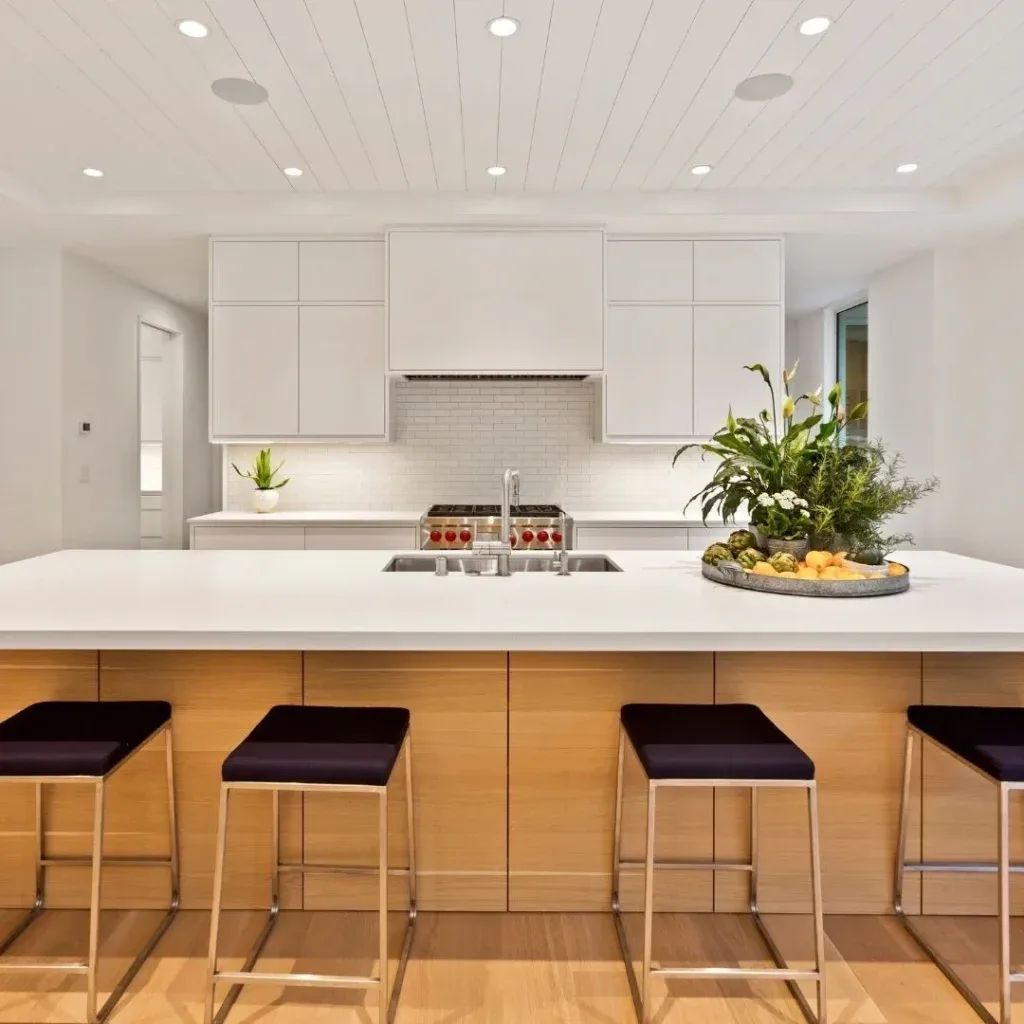
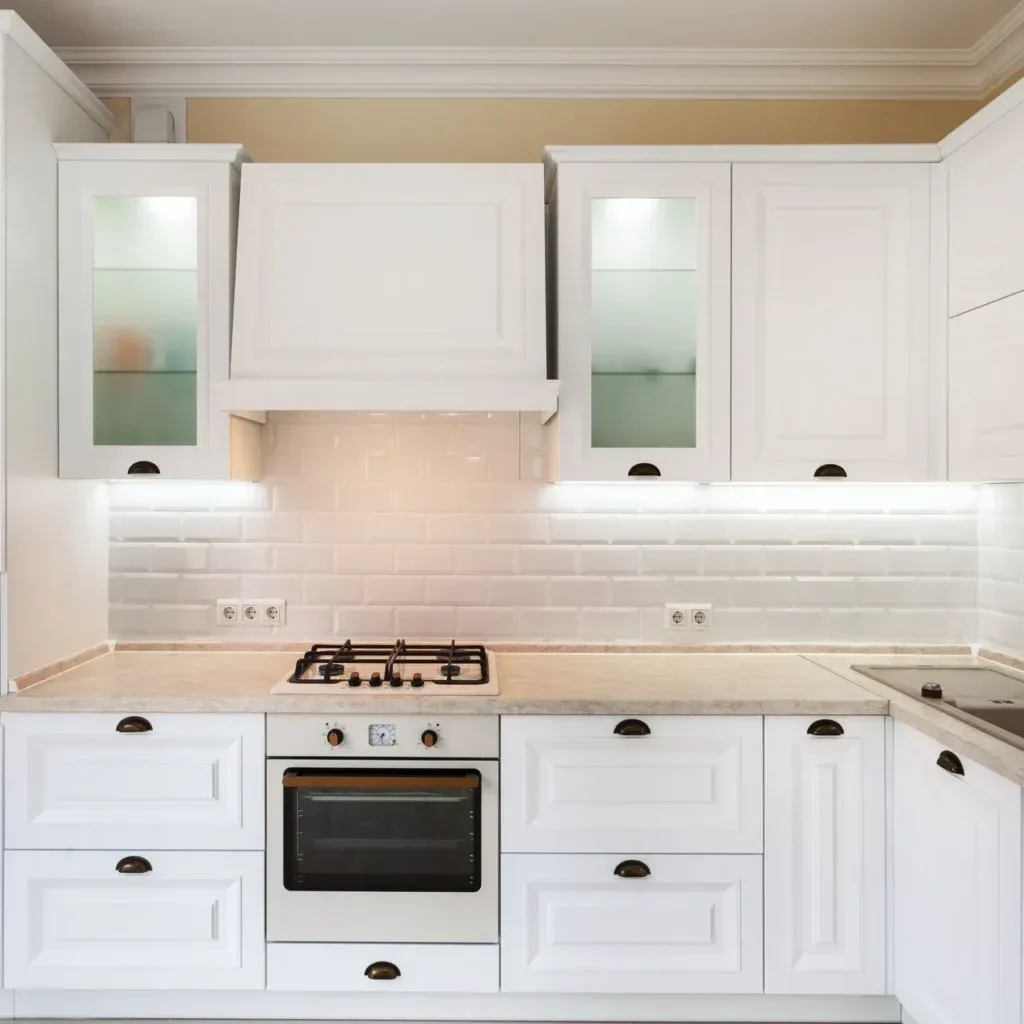
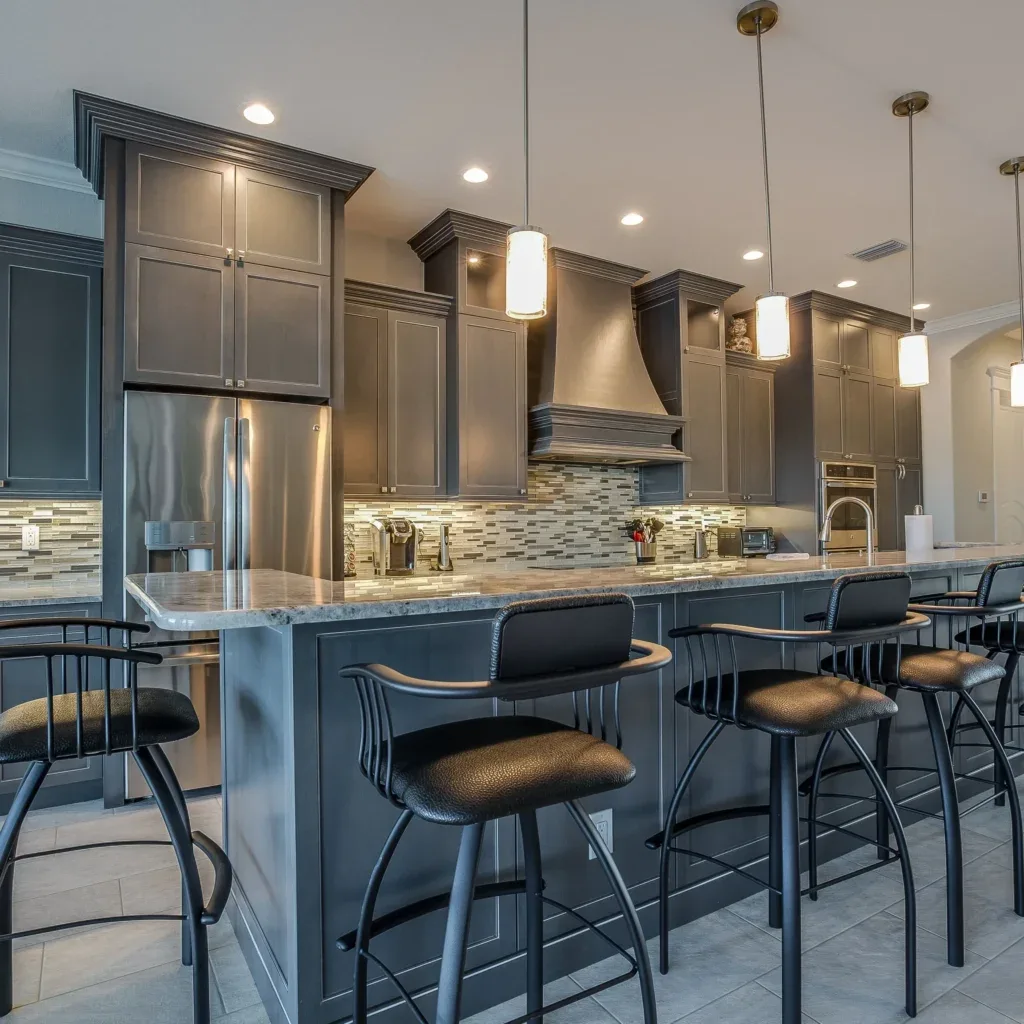
In a kitchen, recessed lights should land over the counters, not behind you where your own shadow covers the work. That usually means a row that follows the cabinets and lights on the walkways and island. Recessed lighting pairs well with pendants and under-cabinet lights, and each group can go on its own switch or dimmer. Under-cabinet lights fill in where upper cabinets block the ceiling light.
Recessed lighting for a home office or home theater
A home office needs light that does not glare on a screen. That means trims that hide the light source and lights placed off to the side of the desk rather than straight overhead. A home theater wants dimmable lights, often along the walls, so the room can go nearly dark without being pitch black. Both rooms benefit from planning before the first hole is cut.
Glare, spacing and color temperature
Recessed lights placed too close to a wall create bright scallops, and lights placed right over a sofa shine in people's eyes. Spacing, trim choice and dimming solve most of that. Color temperature matters too. Warm white suits living areas and bedrooms, while a slightly cooler white can suit kitchens and work areas. Keeping one color throughout a space looks best.
Recessed lighting replacement, LED upgrades and repair
If you already have recessed lights, you may not need new holes at all. Many problems are fixed at the housing or the trim.
LED retrofit trims for existing cans
An LED retrofit trim screws into the bulb socket of an existing can and replaces the bulb and trim in one piece. It gives the ceiling a clean, modern look and much longer life without cutting anything. It is often the fastest recessed lighting upgrade in an older home. We confirm the cans are in good shape and the right size before ordering trims.
Recessed lights that turn off by themselves
A recessed light that shuts off and comes back a few minutes later is usually tripping its thermal protector. The housing is overheating, often from a bulb that is too strong, insulation packed against a non-rated can or a failing socket. Swapping in an LED retrofit trim often solves it, but the cause should be checked first. An overheating can is a warning sign, not just an annoyance.
Replacing old or damaged recessed light housings
Some older cans are worth replacing outright. Rusted housings, cracked sockets, scorched wiring or cans that keep failing are signs. We remove the old housing through the ceiling opening and put in a new fixture, often canless, that fits the hole or a slightly larger one. That avoids having to rebuild the ceiling. We also check the wiring feeding the old can, since heat damage often reaches the cable.
Loose trims and failing spring clips
Trims that hang down from the ceiling usually have tired spring clips or the wrong clips for the housing. Torsion springs and friction clips are not interchangeable. It sounds minor, but a trim that does not sit flat lets humid attic air into the room. We replace the clips or the trim so each light sits tight against the ceiling.
Recessed lighting outside the house
Recessed lights in porch ceilings and soffits give a house a clean look at night and light the entries without a bulky fixture.
Soffit and eave recessed lights
Recessed lights in the soffits wash light down the face of the house and onto the beds below. They make a front elevation look finished at night and help light paths and corners. The fixtures have to be rated for damp or wet locations, and the soffit space is tight, which is where slim canless lights often fit best. We space them so the light looks even across the front of the house.
Porch and patio ceiling lights
A covered porch or patio ceiling is a natural spot for recessed lights. They light the seating area without a hanging fixture to bump into, and they look clean next to a ceiling fan. On a covered patio, the fixtures still need to be rated for the moisture they will see, and the switch should be inside by the door.
Controls for outdoor recessed lighting
Outdoor recessed lights work well on a timer or photocell so they come on at dusk without anyone remembering. We can also tie them to a dimmer or a smart switch. Putting soffit lights on their own control keeps them separate from the porch and patio lights. A photocell also adjusts on its own as the days get shorter or longer, so there is no timer to reset each season.
Recessed lighting cost and is it worth it
People ask about cost before anything else. Here is what moves the number and why we put it in writing.
What drives recessed lighting installation cost
The cost depends on how many lights you want, the type of fixture and trim, how easy the ceiling is to work in and how the power and switches are run. A room with open attic access above is simpler than a downstairs ceiling with finished floors above. New switches, dimmers or a new circuit add scope. Every house is different, so a free visit gets you a written estimate.
Is recessed lighting worth it?
For most homes, yes. Recessed lighting spreads light evenly, makes a low ceiling feel taller and stays out of the way visually. It works especially well in kitchens, living areas and hallways. It is less suited to rooms where a single statement fixture is the point, and many rooms look best with recessed lights plus one feature light. We can help you find the right balance at the visit.
Recessed lighting installation DIY vs pro
Recessed lighting kits are sold as easy installs, and in an open ceiling they can be. In a finished house, the hard parts are the wire runs, the layout around framing, the switch wiring and knowing whether the circuit can carry more lights. That is where DIY installs go wrong and where a licensed electrician earns the call. A light that overheats or flickers later costs more than doing it right once.
Recessed lights in bathrooms, vaulted ceilings and smart setups
Some rooms need a specific kind of recessed light. These are the cases we see most often in Houston homes.
Recessed lights over a shower or tub
Bathrooms are one of the most common places for recessed lights, and the shower is the trickiest spot. A light above a shower or tub must be rated for wet locations, with a sealed lens and trim. It usually goes on a GFCI-protected circuit too. We also look at the bathroom fan, since moisture that does not leave the room ends up in the attic and around the fixtures.
Sloped and vaulted ceilings
A standard recessed light on a sloped ceiling points at the wall instead of the floor. For vaulted and sloped ceilings we use housings or trims made for the pitch, or adjustable gimbal trims, so the light falls straight down. Access is often harder because there is little attic space above a vault. We plan the route for the wire before cutting the first hole, so the ceiling only gets the openings it needs.
Selectable color and smart recessed lights
Many LED recessed lights now let you choose the color of white with a small switch on the fixture, from warm to cool. That makes it easy to match every light in a room. Smart recessed lights and smart dimmers can follow a schedule, dim from your phone or work with a voice assistant. We help you pick a dimmer that is compatible with the lights, which prevents flicker and buzzing.
Air-tight housings and Houston attic heat
Houston attics get very hot in summer, and every hole in the ceiling is a path for that heat and humidity to reach the room. Air-tight rated housings and canless lights seal the opening so conditioned air stays inside. Older non-airtight cans can leak air and let insulation dust fall through. Replacing them with sealed fixtures is one of the simpler upgrades for comfort in an older home.
Recessed lighting installation and LED retrofit
Recessed lighting is the cleanest way to light a room, and the easiest to get wrong.
Where to put recessed lights
We lay them out for the room and the furniture, not a grid, and keep clear of joists and ducts.
LED retrofit
LED retrofit modules for existing cans or new LED recessed lights, with dimmers.
Ask us anything. These come up most.
Can you add recessed lights to an existing ceiling?
Usually yes. Remodel lights go in from below with small holes. We tell you on the visit if your ceiling is the exception.
How much does it cost to install recessed lighting?
It depends on the number of lights, the fixtures, ceiling access and the switch work. Every house is different, so a free visit gets you a written estimate.
Can you install recessed lights without attic access?
Usually, yes. We fish wire along the joists through the light openings and make small access holes only where needed.
What is the difference between can lights and wafer lights?
Can lights sit in a metal housing above the ceiling. Wafer lights are thin canless fixtures with a small driver box, so they fit shallow spaces and install quickly.
Can I convert my old can lights to LED?
Yes. An LED retrofit trim screws into the existing can and replaces the bulb and trim together, with no new holes.
Why does my recessed light keep turning off?
Usually the housing is overheating and the thermal protector shuts it off. A bulb that is too strong or insulation against a non-rated can are common causes.
How many recessed lights do I need in a room?
It depends on the room size, ceiling height and what you want lit. We lay the lights out around the furniture and the way you use the room.
Can recessed lights go in an outdoor soffit or porch ceiling?
Yes, as long as the fixtures are rated for damp or wet locations. Slim canless lights often fit soffits best.
Can recessed lights be put on a dimmer?
Yes. The dimmer has to match the fixtures, so we pair them when we install.
Can recessed lights go over a shower?
Yes, if the fixture is rated for wet locations with a sealed lens and trim. It usually goes on a GFCI-protected circuit. We confirm the rating before installing.
Are there downsides to recessed lighting?
A few. Each light means a hole in the ceiling, poor layout can feel like a runway, and old non-airtight cans can leak attic air. Good planning and air-tight fixtures solve most of these.
Do I need an electrician to install recessed lights?
For new lights, yes. It means new wiring, the right fixture rating for the space and a safe connection in the ceiling. A licensed electrician makes sure it meets code.
How long does recessed lighting installation take?
It depends on the number of lights, attic access, ceiling type and whether new switches or dimmers are needed. Your written estimate explains what the job involves.
From first call to finished job.
Estimates are free. Phones open 24/7.